
The allure of live dealer tables in online gaming lies in their unique ability to mimic the tactile and social aspects of a physical casino, creating a sense of realism that goes far beyond simple screen graphics. Unlike conventional online games, where outcomes are entirely virtual and often feel abstract, live dealer tables provide a bridge between the digital and physical worlds. The presence of a real person, handling cards or spinning a roulette wheel in real time, offers an authenticity that is hard to replicate with automated systems. This human element establishes a sense of unpredictability and subtle nuance, making every game feel fresh and genuinely engaging. Players are not merely interacting with algorithms but with someone whose actions and expressions reflect the natural variability of real-life gaming experiences.
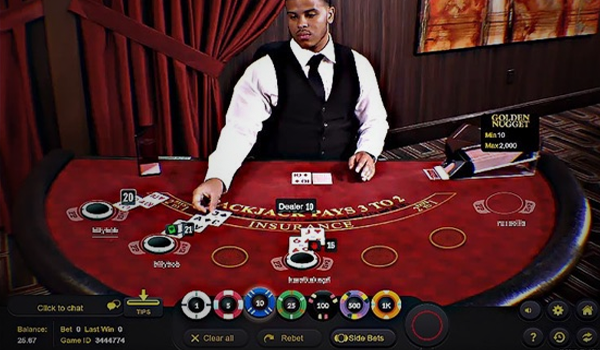
Visual framing plays a pivotal role in enhancing this realism. The way the table is displayed, the camera angles chosen, and the proximity to the dealer all contribute to the perception of being physically present. A well-framed live table replicates the view one would have sitting at a real casino table, capturing the nuances of movement and the rhythm of gameplay. The camera often shifts to focus on the dealer’s hands when distributing cards or operating the wheel, providing close-ups that emphasize the tactile nature of the action. This careful attention to visual detail ensures that the player’s perspective feels grounded in reality, reinforcing the sensation that they are sitting across from a professional dealer rather than interacting with a faceless system.
Beyond visuals, the interactive design of the table environment amplifies realism. Players can communicate with the dealer via chat, ask questions, or respond to light-hearted banter, which mirrors the social interactions of a land-based casino. This dynamic fosters a sense of presence and engagement, transforming the experience from a solitary digital game into a social and immersive encounter. The integration of live chat features, combined with responsive gestures from the dealer, enhances the feeling that each action is meaningful and contextually relevant. This real-time feedback loop between player and dealer is critical for creating a psychologically compelling experience, as it cultivates trust and reduces the cognitive distance between the digital environment and real-world interaction.
Audio cues also reinforce the sense of realism at live tables. The subtle sounds of chips clinking, cards shuffling, or the roulette ball spinning in the wheel provide sensory feedback that resonates with players’ prior experiences in physical casinos. These auditory elements, combined with the visual cues, create a multi-sensory environment that feels tangible. Human perception is highly responsive to such layered sensory input, and when implemented effectively, it significantly enhances immersion. Unlike purely digital games, where outcomes are often indicated through abstract animations or synthetic sounds, live tables offer sensory signals that mirror the real-world experience, making each moment feel authentic.
The psychology of observation plays a further role in why live dealer tables feel real. Players witness the entire process of card shuffling, dealing, and wheel spinning in real time. This transparency reassures participants that the game is fair and not predetermined, fostering a stronger connection to the event. Observing human actions, complete with minor variations and imperfections, triggers a cognitive response that mirrors in-person gaming experiences. The subtle differences in timing, hand movements, or dealer interactions evoke the same attentional and emotional patterns experienced in physical casinos. This alignment between expectation and observation is fundamental to the sensation of realism, as it satisfies the brain’s natural craving for consistency and human engagement.
Spatial awareness is another factor that contributes to perceived realism. Many live dealer platforms use advanced camera setups that replicate multiple angles and perspectives of the table. Wide-angle views allow players to see the full table layout, while focused shots on key actions provide clarity and intimacy. The inclusion of these perspectives enables participants to process spatial relationships, distances, and movements in ways similar to in-person gaming. The brain interprets these visual cues as evidence of a three-dimensional environment, enhancing the sensation that the player is present within a tangible space rather than observing a flat interface.
The timing and pacing of the game also influence the feeling of realism. Unlike instant animations common in traditional online gaming, live dealer tables operate at a natural pace dictated by human interaction. This rhythm, including pauses for decision-making and dealer communication, mirrors real-world gameplay, providing players with a sense of control and involvement. The temporal dynamics create tension, excitement, and anticipation that are absent in automated systems. By adhering to realistic pacing, live tables engage players in a cognitive and emotional loop that closely resembles their experiences at brick-and-mortar casinos.
Moreover, personalization and dealer consistency enhance the immersive quality of live tables. Regular players may recognize familiar dealers, creating a sense of rapport and social continuity. This familiarity mirrors social interactions in physical environments, where repeated engagement fosters comfort and trust. The combination of human presence, dynamic interaction, and environmental authenticity culminates in a gaming experience that feels credible and compelling. Players perceive a layer of social accountability and responsiveness that automated systems cannot replicate, deepening engagement and reinforcing the realism of the interaction.
In essence, the realism of live dealer table framing is a carefully orchestrated interplay of visual accuracy, human interaction, auditory reinforcement, spatial perception, and temporal pacing. Each element contributes to the player’s perception of authenticity, transforming online gaming into an experience that feels remarkably close to sitting at a real casino table. By combining technical precision with human nuance, live dealer tables create a multi-dimensional environment that resonates with players’ sensory, cognitive, and emotional expectations. This integration of technology and human interaction is what allows live dealer tables to transcend the digital medium, providing a compelling sense of presence that continues to captivate and engage players around the world.







Leave a Reply